City
of God
Since
enrolling on this course I have greatly increased the amount of films
I view and as a result, stumbled upon 'City of God'. I found this
film truly inspiring due to its inventive editing and camera work.
Director Fernando Meirelles adopts an incredibly idiosyncratic style
that has influenced my own filming approach. I therefore decided to
write a small analysis of the film:
“I
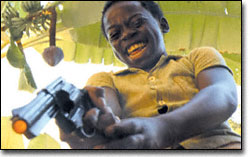
smoke, I snort, I've killed and robbed. I'm a man” pleads 'Steak &
Chips' an amusingly nicknamed boy in a unconvincing attempt to
procure himself a gun; a symbol of membership to one of two rival
gangs. 'Carrot' (the gangs power hungry leader) folds with very
little persuasion and hands the child a weapon and with it his pass
into the centre of a whirlwind of violence that will ultimately lead
his nauseatingly premature death. Welcome to City
of God,
Fernando Meirelles's searing anecdotal allegory of violence and
power, a film in which we are brutally reminded that the western
culture we take for granted is really a massively under appreciated
luxury.
The film portrays Cidade De Deus's (City of God) rapid decline, from a sunny coastal shanty town, home to children playing football in the streets, to a shadowy slum where gangs of rival adolescents mow each other down with handguns in a war they do not fully comprehend. Meirelles tells the tale through the unnervingly nonchalant narrations of a local boy named Rocket, who manages to narrowly escape the thuggery he grew up with through his aspiration of becoming a photographer (that and his comic ineptitude at crime).
By filming across the sprawling slum using hand held cameras Meirelles places his audience uncomfortably close to the visceral unfoldings; frequent implementations of low angle shots make Cidade De Deus a truly overwhelming environment and its inhabitants ferociously menacing as we are often forced to view events from a child's perspective. Its also safe to say that Meirelles has mastered the art of formalist editing as he frequently juxtaposes shots and symbols in order to create new meanings. For example the film opens to a comical chase scene in which we witness Lil Ze and his men (the movies main oppressive force) incompetently pursue a chicken through the winding Favela. This event is then cross-edited with Rocket (the films oppressed protagonist) disquieted over his current standing in the slum (he is an enemy to Lil Ze). This comparison of images makes Rocket the chicken in Lil Ze's chase; a powerful metaphor for his subservience to the domineering antagonist.
City of God shines even brighter upon closer inspection as Meirelles uses ingenuity and creative flare to ensure that his films mise en scene is saturated with visual metaphors and deep pragmatics. We witness the slum in the seventies as an open, vibrant dwelling with large expanses of golden sands; a slum from a child's perspective. This however is an angle quickly destroyed by a tsunami of drugs and violence as we witness our protagonists grow into hardened, volatile, yet painfully fragile gangsters, these golden pools are replaced with rich, dark shades that drown out the once charming shanty town's features, mirroring its inhabitants hardships.
'City of God' was an incredibly powerful, moving experience; one that managed to provoke emotions and empathy that very few films achieve. Meirelles's lush cinematography and frenetic editing ensure that the viewer is completely enthralled by an eye opening world of violence that could shock even the most hardened viewer.

No comments:
Post a Comment